2014 was another busy year at DCI, here are some of our highlights:
Janurary: Ambit Baltimore production
We kicked the year off with a large production and uplink as part of a corporate event held in Baltimore. DCI provided the transmission, along with the switcher, graphics, cameras and audio in the conference room, including a jib camera.

February: Russian Ambassador's Olympic Party

 The Sochi Olympics opening ceremony took place late morning DC time, and was not available live in the United States. We were asked to receive a feed of the event brought in from Russian TV (encrypted, of course, to keep NBC happy). We parked our compact satellite truck outside of the gilded former Russian Embassy down the street from the White House, which now serves as the Ambassador's residence. The Ambassador was hosting a party for VIPs to watch the opening ceremony on monitors spread out throughout the reception rooms. The embassy staff brought Black Sea caviar and tea out to the satellite truck.


July: Havana and Santiago, Cuba
We took two flyaway systems to Cuba for the second time in as many years. This trip was to cover the state visit of Xi Jinping, President of China, to Cuba. We set up one system outside the Nacional Hotel in Havana before driving 8 hours across the island to the port city of Santiago for live coverage for Chinese TV.
More from the 2014 Cuba trip.


August: US-Africa Leaders' Summit
In August 2014, President Obama hosted the US-Africa Leaders' Summit, which was the most heads of state in Washington ever. With so many VIP's in the city, logistics were difficult, and both of our satellite trucks were present to be the pool feed for host broadcaster Bloomberg TV. Our HD1 uplink truck provided six muxed HD paths with multiple audio languages, while our compact SNG truck stood as backup.


September: First ESPN backhaul
A year after finishing our qualification for ESPN in Bristol, we snagged our first job for the network, a college football game in Cincinnati (held in the Brown's stadium) for ESPN-2. including a full 16 channels of audio.


November: Ferguson, MO
Our HD1 uplink truck travelled to the St. Louis area to cover the rioting in Furgeson. This was actually the first of two last-minute trips we made for this story, the second was a month later when the grand jury results were announced. We provided multiple HD and SD uplinks to Europe during this job.


November: Live Surgery in Vancouver, BC
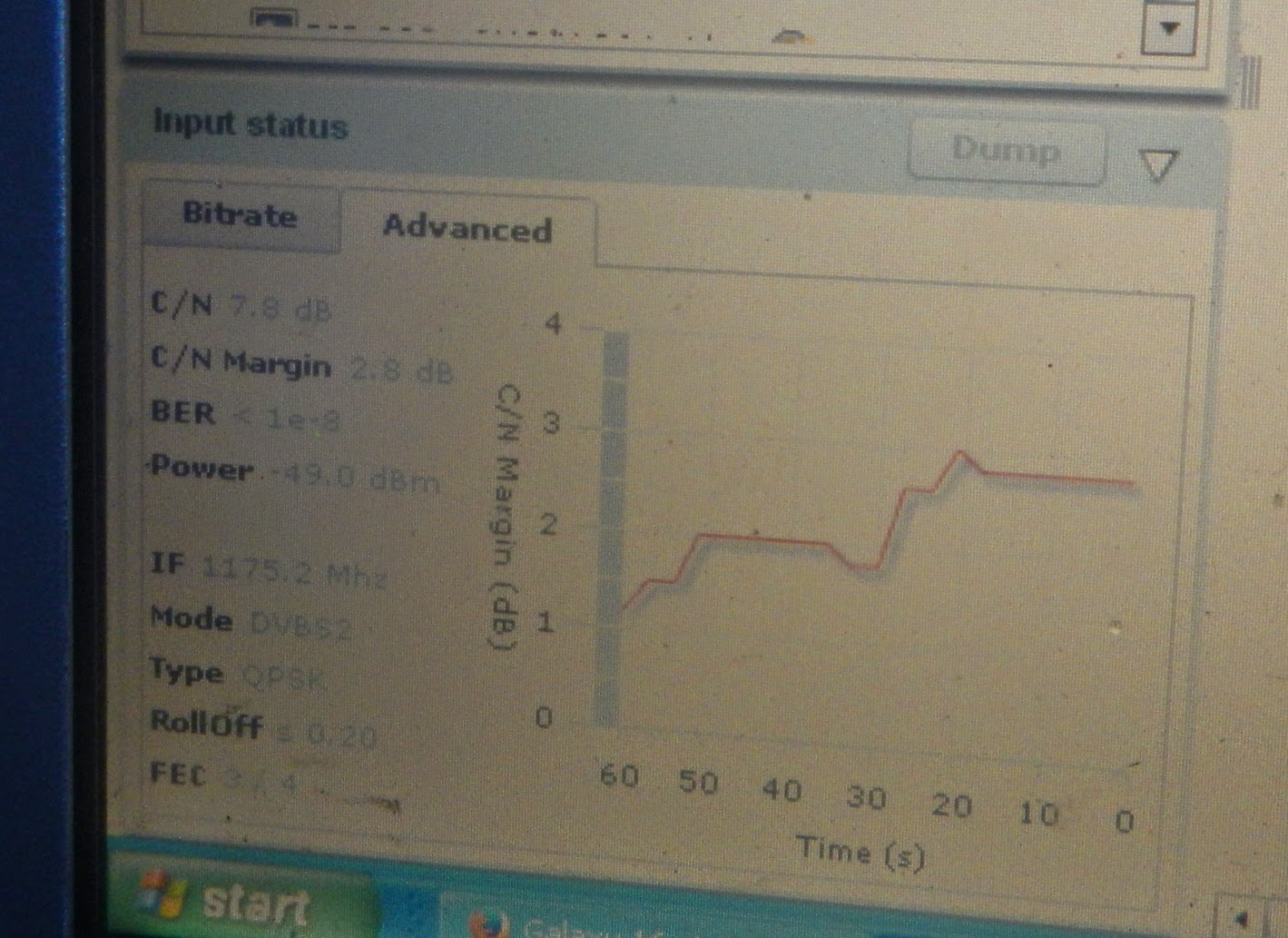
We provided transportable downlink services in Vancouver, British Columbia for the annual meeting of the AAGL organization. We arranged the transmission facilities at two hospitals in the United States and performed quality control on the live feeds. This location was a challenge because tall buildings limited us to edge of the arc satellites, low on the horizon. This resulted in some adjacent satellite interference because of the 1.1m portable antenna, which is more suited for transmitting than receiving. But we had expected this and planned ahead- purchasing more bandwidth than would normally be used so we could switch to lower-complexity modulation and overcome the noise issues. The Ateme receivers we brought provided a real-time signal quality graph which assisted in aiming the dish beyond the limits of the portable spectrum analyzer to get optimum signal quality. The location itself was great- in the shadow of the Vancouver Olympic Torch on one side, and seaplanes landing and taking off on the other side. Thankfully, Vancouver's persistent rainy weather held off for our event. More.


December: COP20 in Lima, Peru
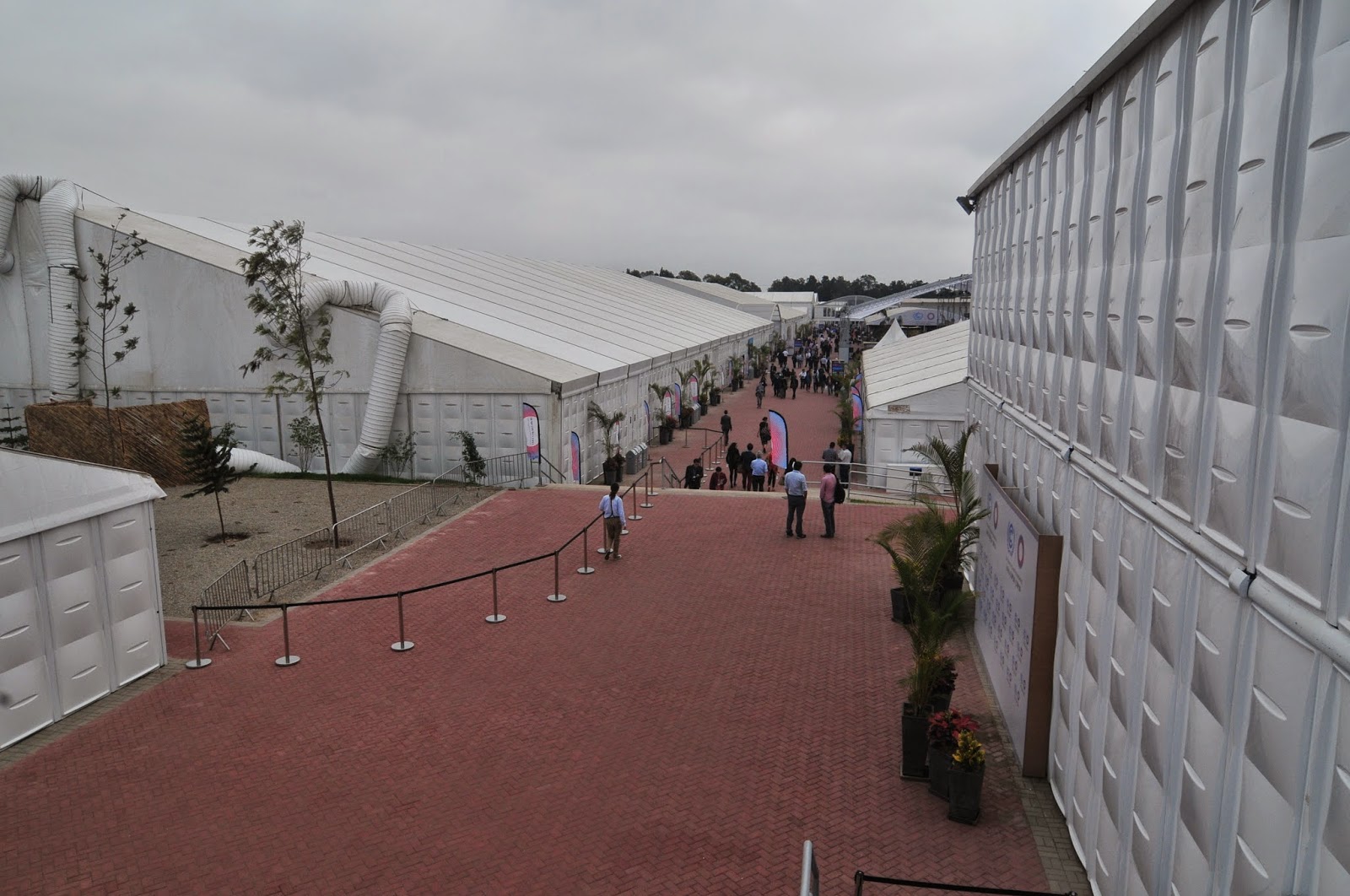
We returned to Lima, Peru for the first time in over 20 years to cover the UN COP20, an annual followup to the Kyoto Protocol climate change meetings. This is our second COP event, having covered one held in Cancun a few years before. This was also the second deployment for our new flyaway dish, and it worked flawlessly. The biggest difficulty was the setup and breakdown, after the event staff tried to cement our cables into place and laid a brick walkway over them. More here.


December 31
We finished up the year with some more live TV, using our camera-back microwave system to cover a New Year's Eve party at DC's famous Howard Theater. A HD microwave receiver with diversity antennas spread around back stage allowed our camera to roam freely throughout the venue, even go live from the street outside of the theater- all completely wireless to the uplink truck!


Janurary: Ambit Baltimore production
We kicked the year off with a large production and uplink as part of a corporate event held in Baltimore. DCI provided the transmission, along with the switcher, graphics, cameras and audio in the conference room, including a jib camera.
February: Russian Ambassador's Olympic Party
The Sochi Olympics opening ceremony took place late morning DC time, and was not available live in the United States. We were asked to receive a feed of the event brought in from Russian TV (encrypted, of course, to keep NBC happy). We parked our compact satellite truck outside of the gilded former Russian Embassy down the street from the White House, which now serves as the Ambassador's residence. The Ambassador was hosting a party for VIPs to watch the opening ceremony on monitors spread out throughout the reception rooms. The embassy staff brought Black Sea caviar and tea out to the satellite truck. 
DCI and BoxLine Box produced the first-ever 3D surgery broadcast at the AUA convention in San Diego in 2013, for Intuitive Surgical. The 2013 show was so successful we were asked back to produce all the live surgery at the 2014 convention in Orlando. After the AUA show, we took the sat truck down to Miami, and did our own downlink using our Norsat flyaway and a remote-controlled receiver for an AUA-related event at the Eden Roc in Miami Beach with the truck transmitting from Miami General Hospital. Read more about the 3D surgery here.
July: Havana and Santiago, Cuba
We took two flyaway systems to Cuba for the second time in as many years. This trip was to cover the state visit of Xi Jinping, President of China, to Cuba. We set up one system outside the Nacional Hotel in Havana before driving 8 hours across the island to the port city of Santiago for live coverage for Chinese TV.
More from the 2014 Cuba trip.
August: US-Africa Leaders' Summit
In August 2014, President Obama hosted the US-Africa Leaders' Summit, which was the most heads of state in Washington ever. With so many VIP's in the city, logistics were difficult, and both of our satellite trucks were present to be the pool feed for host broadcaster Bloomberg TV. Our HD1 uplink truck provided six muxed HD paths with multiple audio languages, while our compact SNG truck stood as backup.
September: First ESPN backhaul
A year after finishing our qualification for ESPN in Bristol, we snagged our first job for the network, a college football game in Cincinnati (held in the Brown's stadium) for ESPN-2. including a full 16 channels of audio.
November: Ferguson, MO
Our HD1 uplink truck travelled to the St. Louis area to cover the rioting in Furgeson. This was actually the first of two last-minute trips we made for this story, the second was a month later when the grand jury results were announced. We provided multiple HD and SD uplinks to Europe during this job.
November: Live Surgery in Vancouver, BC
We provided transportable downlink services in Vancouver, British Columbia for the annual meeting of the AAGL organization. We arranged the transmission facilities at two hospitals in the United States and performed quality control on the live feeds. This location was a challenge because tall buildings limited us to edge of the arc satellites, low on the horizon. This resulted in some adjacent satellite interference because of the 1.1m portable antenna, which is more suited for transmitting than receiving. But we had expected this and planned ahead- purchasing more bandwidth than would normally be used so we could switch to lower-complexity modulation and overcome the noise issues. The Ateme receivers we brought provided a real-time signal quality graph which assisted in aiming the dish beyond the limits of the portable spectrum analyzer to get optimum signal quality. The location itself was great- in the shadow of the Vancouver Olympic Torch on one side, and seaplanes landing and taking off on the other side. Thankfully, Vancouver's persistent rainy weather held off for our event. More.
December: COP20 in Lima, Peru
We returned to Lima, Peru for the first time in over 20 years to cover the UN COP20, an annual followup to the Kyoto Protocol climate change meetings. This is our second COP event, having covered one held in Cancun a few years before. This was also the second deployment for our new flyaway dish, and it worked flawlessly. The biggest difficulty was the setup and breakdown, after the event staff tried to cement our cables into place and laid a brick walkway over them. More here.
December 31
We finished up the year with some more live TV, using our camera-back microwave system to cover a New Year's Eve party at DC's famous Howard Theater. A HD microwave receiver with diversity antennas spread around back stage allowed our camera to roam freely throughout the venue, even go live from the street outside of the theater- all completely wireless to the uplink truck!
We are looking forward to another great year in 2015!